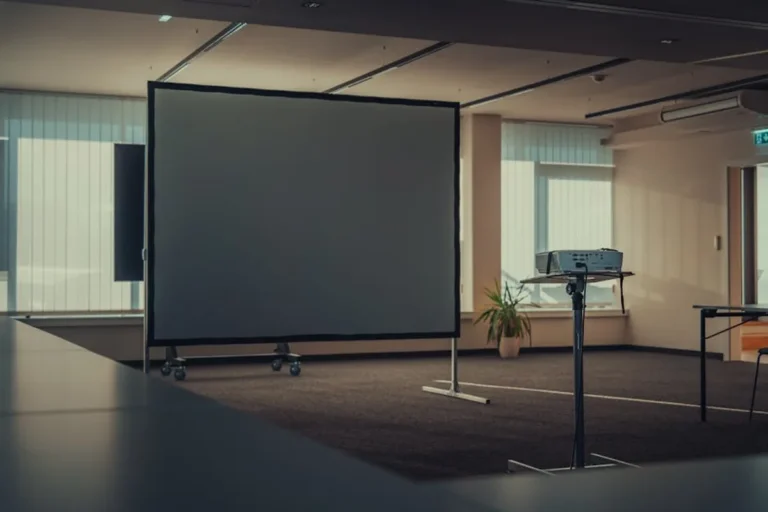
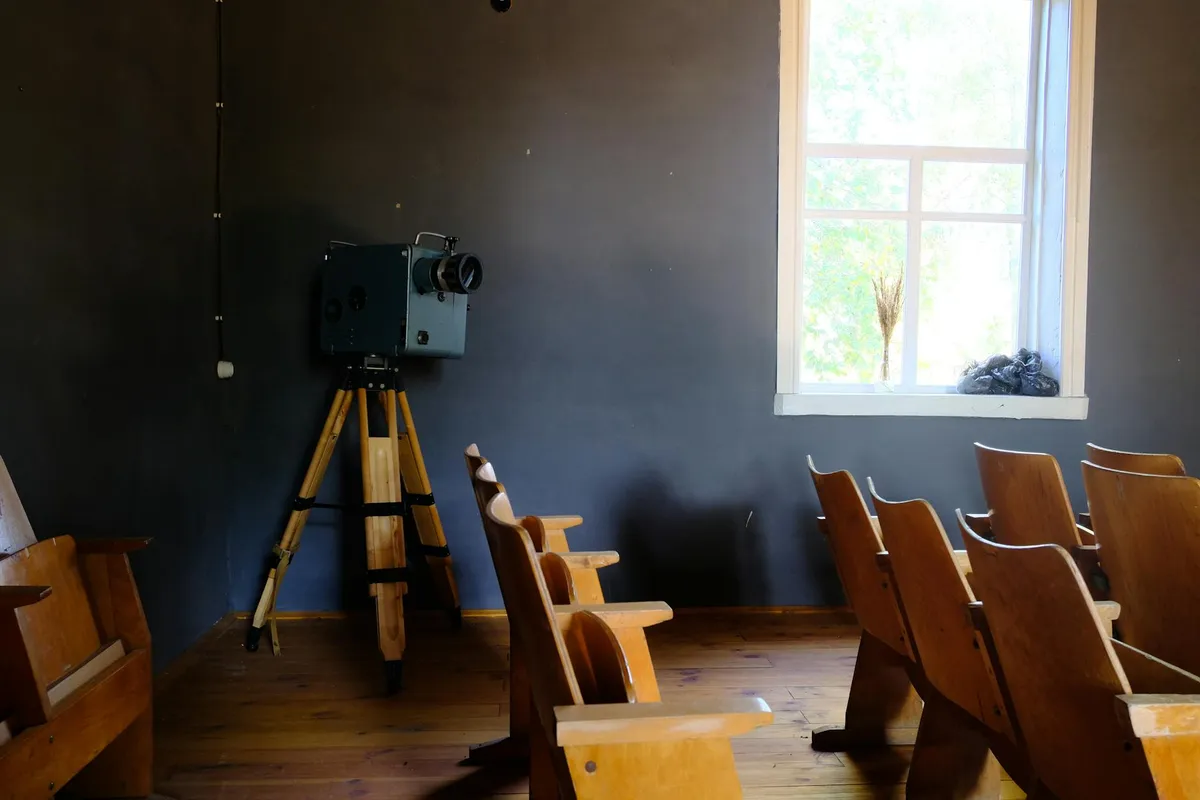
Generations of American schoolchildren in the 1950s through 1980s spent substantial classroom time watching educational films projected on portable screens. The films covered every conceivable subject — biology, history, civics, hygiene, vocational subjects, safety. The productions ranged from competent to excellent. Many of them shaped how their viewers understood the world.
Almost no one writes about this body of work. It is treated as quaint, as outdated, as the kind of media that has been superseded by better contemporary alternatives. Most of the films sit in archives, occasionally surfacing on YouTube as nostalgia, rarely engaged with seriously.
I want to think through what this body of work was, what it accomplished, and what the contemporary erosion of attention to it means.
What educational film actually was
Educational film as an institutional category developed in the early 20th century alongside the broader development of cinema. The pioneering production company Coronet Films began making educational shorts in the 1940s. Encyclopedia Britannica Films produced extensive catalogs covering most academic subjects. The federal government and various state agencies produced training and educational films during World War II that established institutional capacity that continued for decades after.
By the 1960s, the educational film industry was substantial. Major studios maintained dedicated educational divisions. Schools rented films from libraries that maintained extensive catalogs. Specialist projectionists serviced equipment in schools across the country. The infrastructure for delivering educational film was genuinely substantial.
The films themselves varied enormously in quality. The best work was genuinely excellent — well-photographed, thoughtfully scripted, often quite sophisticated in their pedagogical approach. The mediocre work was forgettable. The worst work was bad in specific ways that are visible in retrospect (cultural assumptions of the period, scientific claims that did not age well, propagandistic political content).
What the medium accomplished
Educational film at its best accomplished things that other media cannot accomplish as well.
Visualization of phenomena. Film could show what photographs cannot — process over time, scale relationships, dynamic systems. A film showing the development of a chick embryo, the workings of a steam engine, the migration patterns of birds — these communicate things that text and still images struggle to convey.
Standardized instruction. A single well-produced educational film could deliver consistent instruction across thousands of classrooms. The variation in teacher expertise was less consequential when supplemented by quality film material.
Accessibility of expert presence. Educational films often featured genuine experts demonstrating their fields. Students who would never meet a working scientist could see one explain the work. Students in rural districts could access educational resources comparable to elite urban schools.
Coverage of subjects difficult to demonstrate live. Surgical procedures, industrial processes, geographical regions, historical events — film could cover subjects that classroom demonstration could not.
The medium had real limitations. It could not interactively respond to student questions. It assumed adequate audio-visual equipment. It required teacher facilitation to integrate effectively. But within its constraints, it accomplished things that other media could not match.
The decline of attention
The decline of educational film as a serious cultural category has several causes.
The shift to video and then to digital media in schools changed delivery infrastructure. Many of the original films are difficult to access in usable form for contemporary classrooms.
The economics of educational media production changed. The market that supported substantial production budgets in the mid-20th century has largely disappeared. Most contemporary educational video is produced at much lower budget than the films of the peak educational film era.
Cultural attention has shifted toward newer educational media formats — interactive software, online courses, video games. The older educational films are perceived as outdated regardless of their actual content quality.
Academic study of educational film has remained limited. Film studies departments focus on theatrical cinema. Education departments focus on contemporary teaching methods. Media studies has limited engagement with the educational film tradition.
What survives in archives
Substantial portions of the educational film tradition survive in archives. The Internet Archive's Prelinger collection includes thousands of educational films from the period. Various university and library archives hold substantial collections. Many of the original production companies' catalogs have been preserved.
Access has improved substantially with digitization. Films that previously required physical rental are now often viewable online. The infrastructure for engaging with this tradition exists; the engagement itself is limited.
What contemporary practitioners can learn
The educational film tradition has lessons for contemporary educational media producers.
Production values matter. The best educational films had budgets and production values comparable to theatrical cinema of their period. The contemporary "talking head explainer video" tradition often has lower production values than 1950s educational films, despite vastly cheaper production technology.
Pedagogical thoughtfulness matters. The best educational films were structured around pedagogical principles. Contemporary educational video often skips this thoughtfulness in favor of personality-driven explanation.
Visual rigor matters. Educational film at its best used film as a visual medium with attention to image quality and visual storytelling. Contemporary educational video often treats the medium as a delivery system for verbal explanation.
Respect for audience matters. The best educational films assumed serious students capable of complex engagement. Contemporary educational media often condescends.
Engaging with the historical tradition can inform contemporary practice in ways that ignoring it cannot.
What this teaches about media history
The educational film case is one example of a broader pattern. Substantial bodies of cultural production exist that fall between the academic categories of "high art" and "popular media." These bodies of work get less serious attention than their cultural significance warrants. They survive in archives but live cultural engagement with them is limited.
Other examples include corporate training films, industrial films, government documentary, and various other categories of utilitarian moving image production. Each represents substantial cultural production that operates largely outside the categories where serious attention concentrates.
The cumulative effect is that significant portions of the cultural record receive minimal contemporary engagement. The work is not forgotten exactly; it is just not actively engaged with.
A closing observation
I find the educational film tradition interesting partly because it represents a particular kind of cultural production that has largely disappeared. The combination of production resources, pedagogical thoughtfulness, and broad cultural significance is hard to find in contemporary educational media.
The films continue to exist in archives. The traditions that produced them have largely ended. The contemporary work that might benefit from engagement with the historical tradition mostly does not engage with it.
This is a small loss in the broader scheme of cultural transmission. It is also recoverable for anyone willing to engage with the substantial body of work that survives in accessible form.
The films wait in archives. The lessons they could offer are available to anyone willing to look.